
Is there no greater issue gripping the nation?
As a child, I envisioned turning my garage into an arcade, a place where all the neighborhood kids could hang out.
I’d charge a dollar a head, a reasonable price. My mom would make pizza. There’d be snacks and drinks and maybe contests and prizes.
I sketched a layout of the game room floor. The idea of owning an actual arcade cabinet back then—let alone several of them—was unimaginable, so we had the next best thing: home video game consoles.
The consoles would be connected to different TV sets positioned throughout the garage, displaying a dizzying array of electronic bliss.
Most kids in my neighborhood already had their own video game systems, so I don’t know what I was thinking.
Nonetheless, I held a garage sale with a meager collection of used Nintendo games to lure prospective patrons. Even in their original boxes, these games, oddly enough, were considered of little value during the rise of the 16-bit era.
One Super Nintendo and a TV on a workbench wasn’t exactly the full realization of my dream. It worked out about as well as imagined. I sold a few games for cheap. Some friends came by to play Star Fox, but nothing much came of it.
My ambitious enterprise went nowhere. The day ended with my mom telling me to bring our TV back inside the house.
Blast from the Past
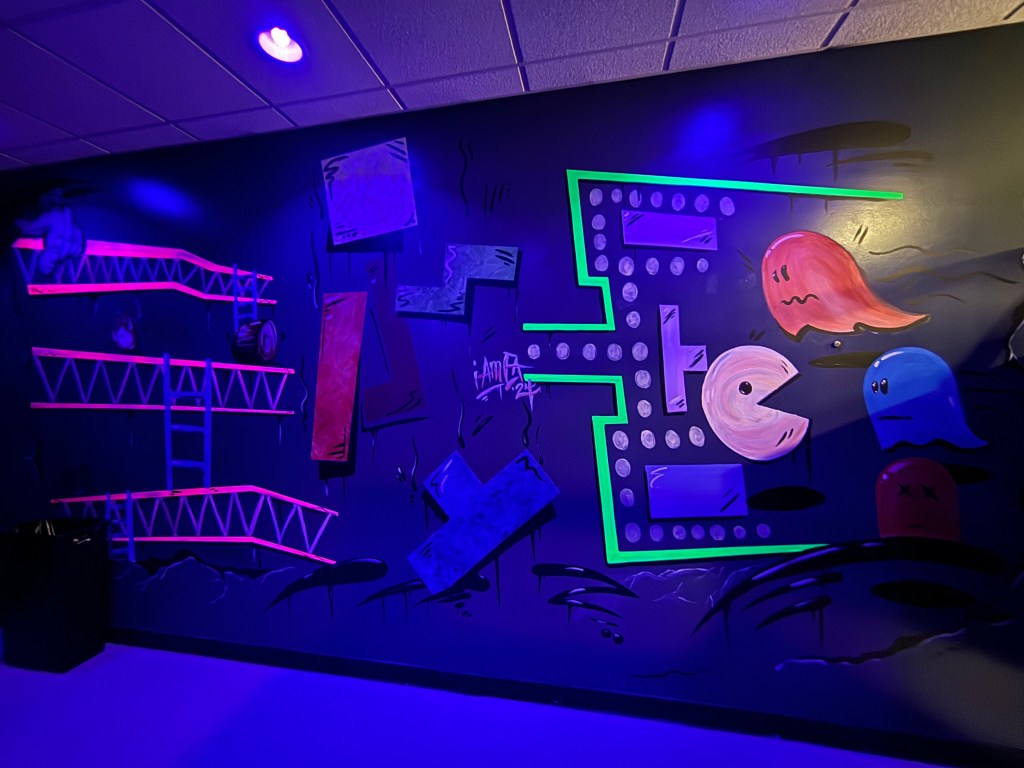
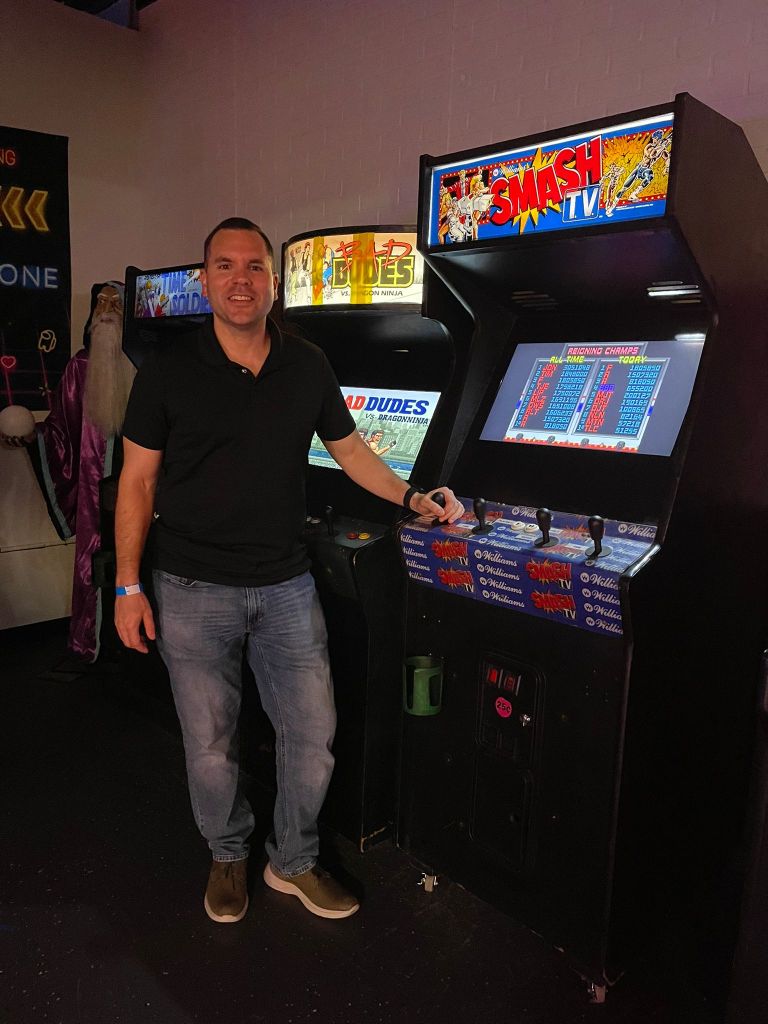
Retro arcades and video game bars have emerged over the years, finding a devoted following among Gen Xers and millennials who came of age during the golden era of arcade gaming.
I’d love to own an arcade bar, but the reality of such an endeavor is far less rosy.
Most arcade cabinets are 30 to 40 years old, bringing significant maintenance costs in addition to the wear and tear of daily use. And don’t get me started on the costs associated with pinball machine maintenance. Yikes.
The challenges of operating a retro arcade/video game bar extend beyond a passion for gaming. Managing tight profit margins, maintaining a consistent customer base, and sustaining a viable long-term business model are just a few realities to contend with.
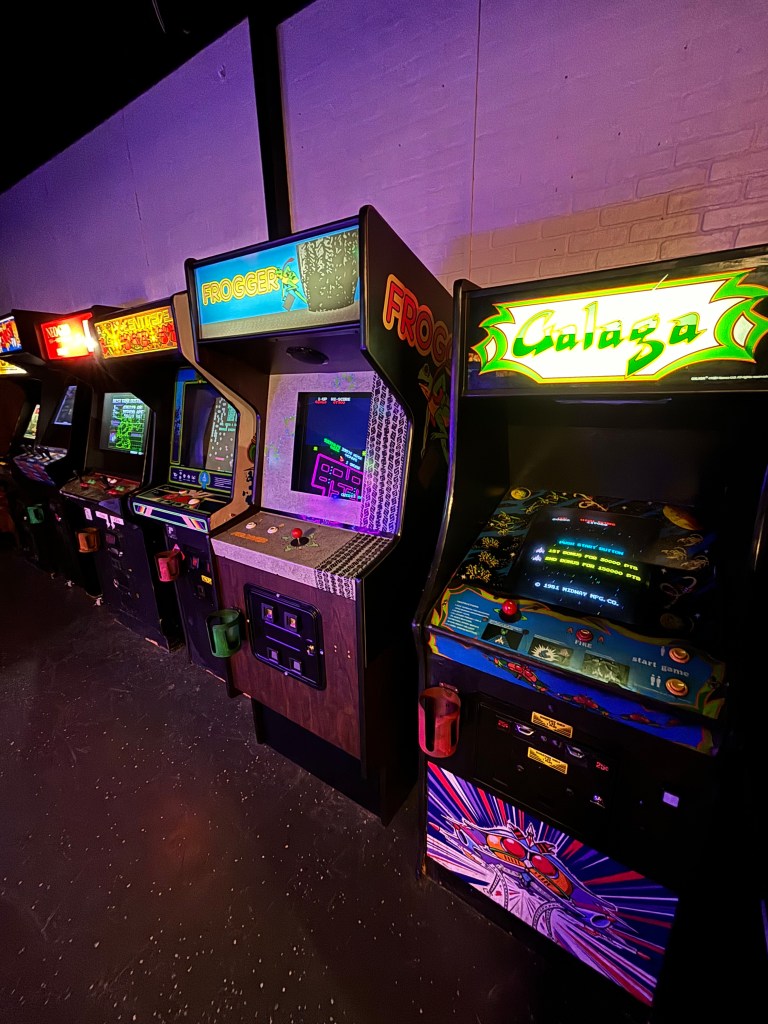
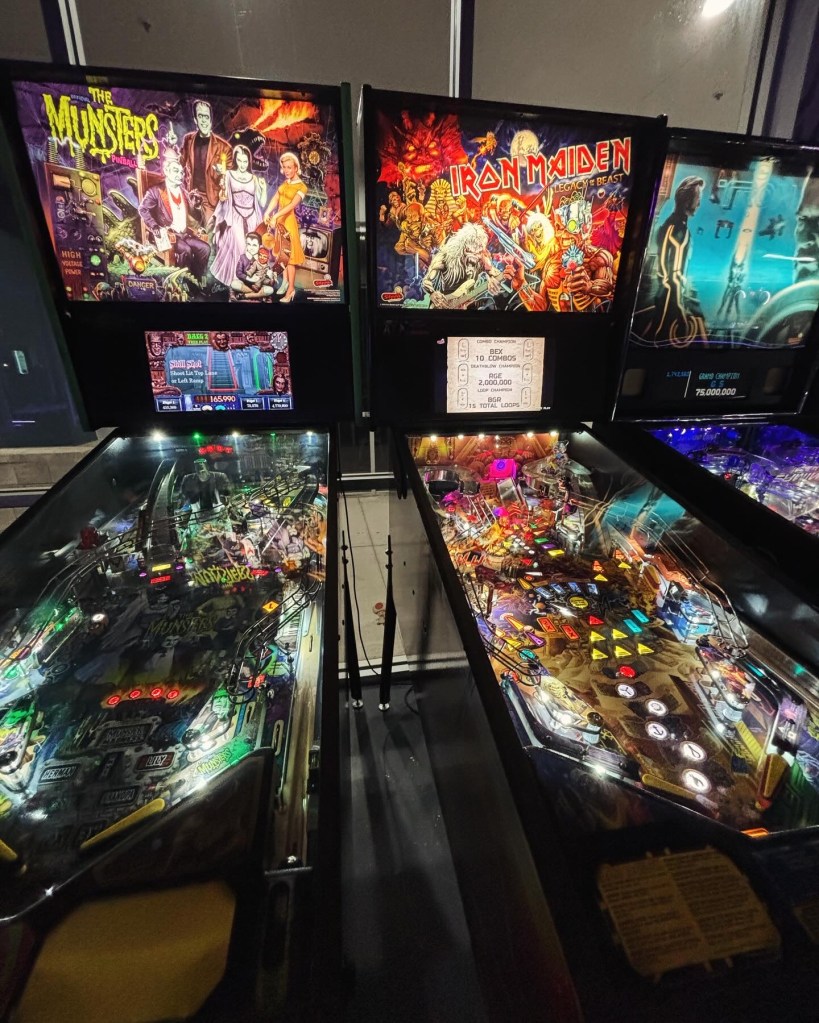
Some establishments charge an admission fee for unlimited play, while others rely on card-based credit systems. Although the modernization of the arcade experience has made gaming more convenient than ever, it’s still remarkable to think how far the industry has come.
I never would have imagined a time when you could walk into an arcade and play virtually any game at the push of a button. Gone are the days of change machines and quarters, which I can easily embrace.
Unfortunately, the modern arcade has also become increasingly carnival-like, trading iconic quarter-munchers for flashing prize games, giant spinning wheels, and lever-pulling attractions that feel closer to a casino than the arcades of old.
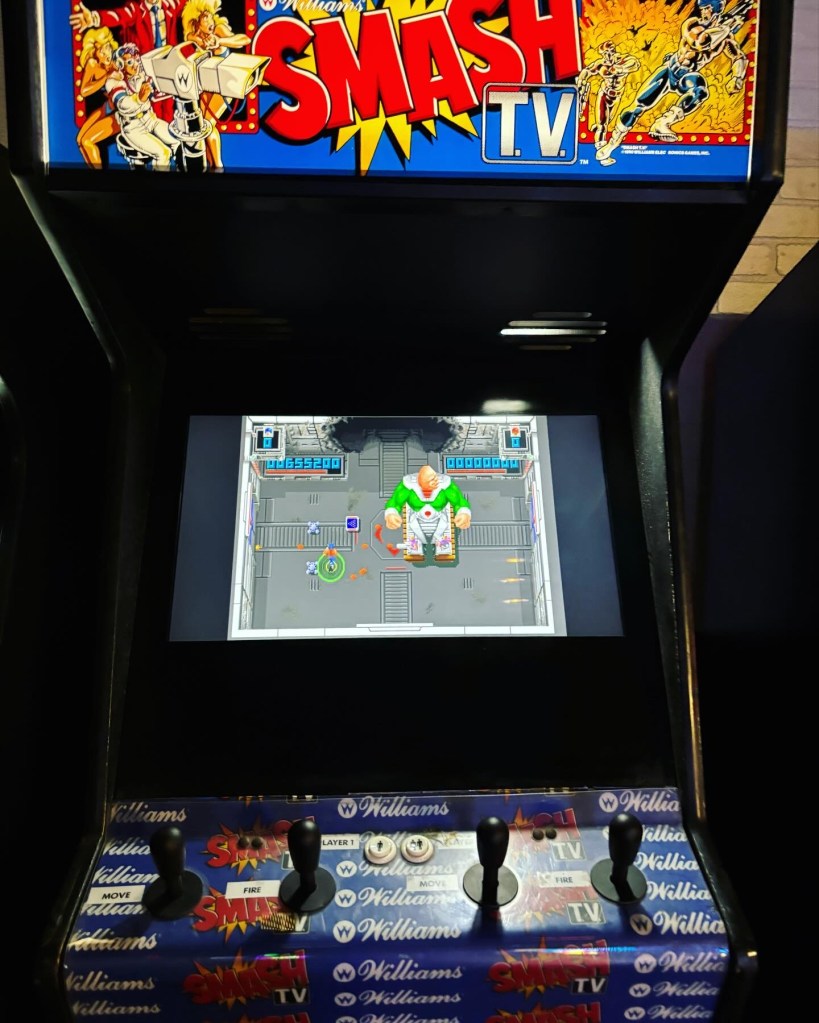
But that’s okay. I’ll take Smash TV over a row of flashy claw machines any day.
Arcade Revolution
I purchased my first house about five years ago. At least there’s the illusion of ownership with an ever-increasing monthly mortgage payment. Naturally, the prospect of a game room was a top priority.
Around this time, a company called Arcade1Up arrived on the scene, offering a wide assortment of licensed arcade replica cabinets at affordable prices.
Their classic lineup included games like Pac-Man, Ms. Pac-Man, Street Fighter II, Mortal Kombat II, Dragon’s Lair, Teenage Mutant Ninja Turtles, The Simpsons, Tron, Golden Axe, Final Fight, Killer Instinct, Time Crisis, and more. There seemed to be no limit to the retro-gaming possibilities.

I followed their releases closely, searching for sales where I could find them. I’d wait for a price drop only to see a cabinet I wanted sell out. The idea of owning an arcade replica was thrilling, even if it wasn’t a full-scale machine and ran on emulated hardware.
We often hear the term “nostalgia bait.” In recent years, nostalgia itself has taken on a somewhat negative or cynical connotation, often implying an unwillingness to let go of the past.
My interest in retro-gaming and popular culture from the 1980s and ‘90s is driven by a reverence for the past, not a reliance.
These were and remain great games, works of art in many cases, that have brought endless enjoyment to the masses. There is more than enough negativity in the world. What’s wrong with focusing on things that make us happy?
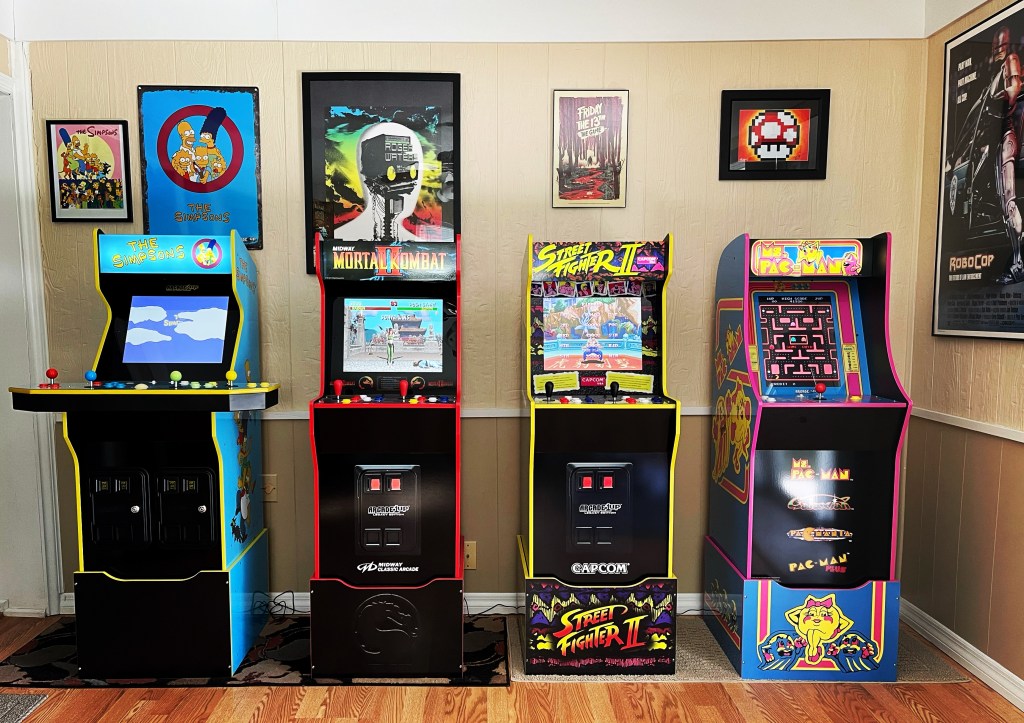
My patience and persistence paid off, resulting in the gradual purchase of four Arcade1Up cabinets over the years. Assembly often took an entire day, ending with an innate sense of satisfaction despite the utter pain in the ass of putting one together.
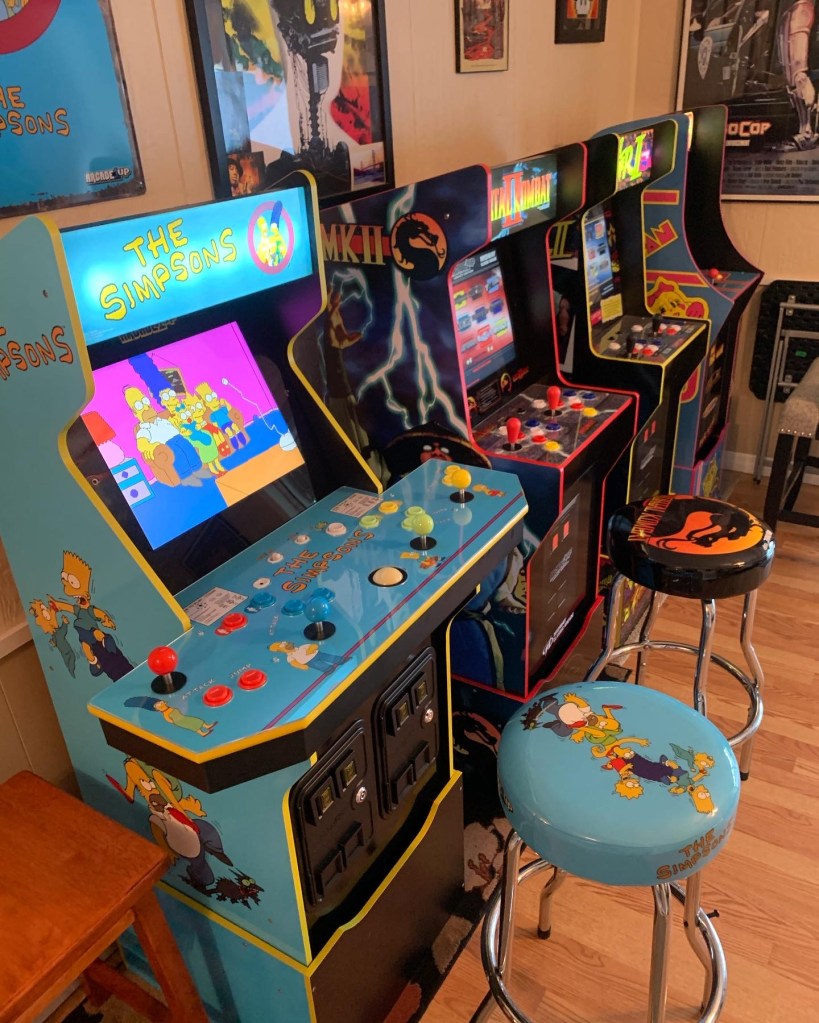
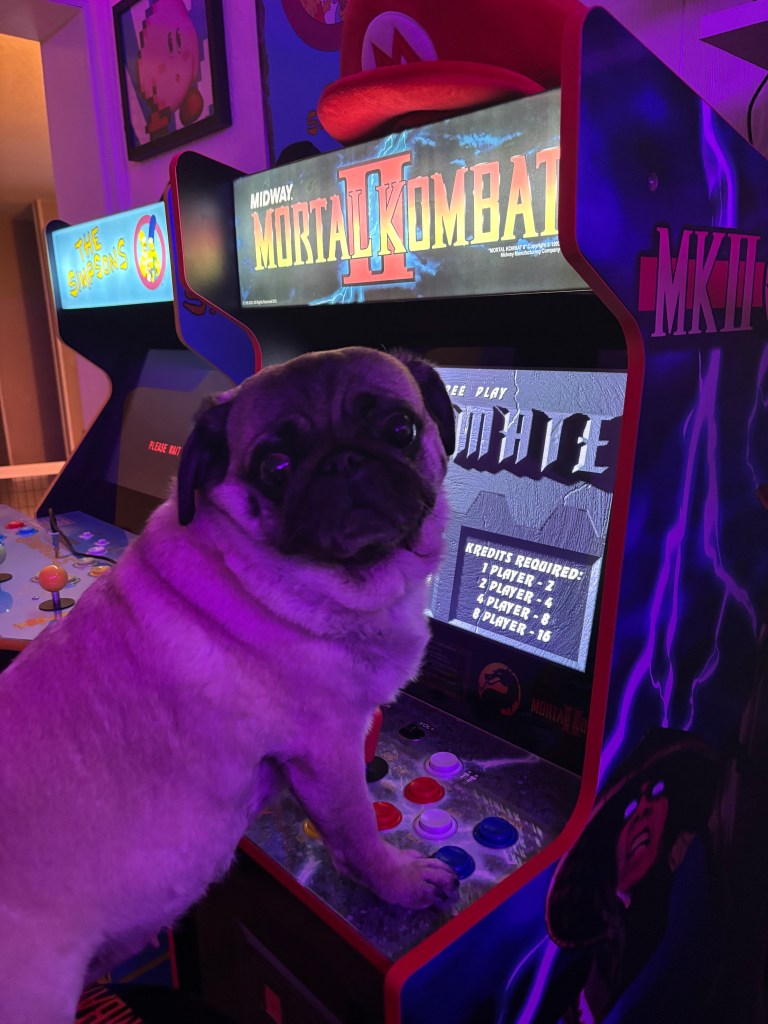
My collection included Ms. Pac-Man, Street Fighter II, Mortal Kombat II, and The Simpsons, remaining the closest I’d ever get to capturing the authentic arcade experience. What next?
Ready Player One
I thought my collection was complete until Arcade1Up released its version of Midway’s classic light-gun shooter Terminator 2: Judgment Day. I had to get it despite not having much space left in the game room.
Its $699 price tag, however, told me differently.
“No problem,” I thought. “I’m sure the price will eventually drop.”
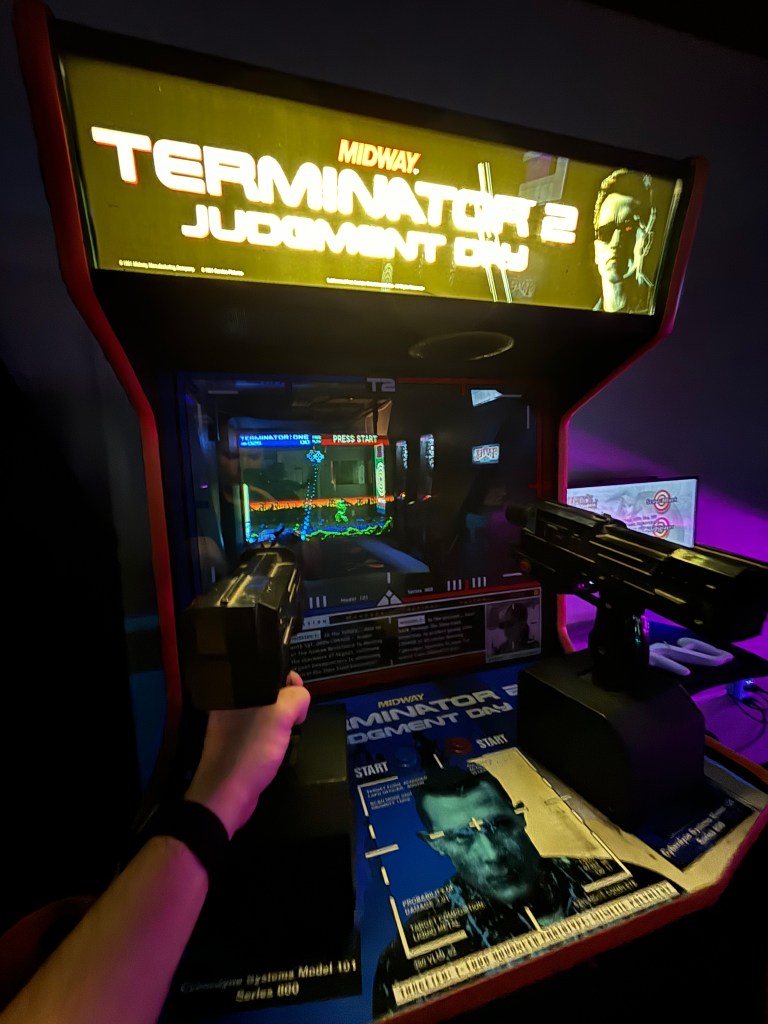
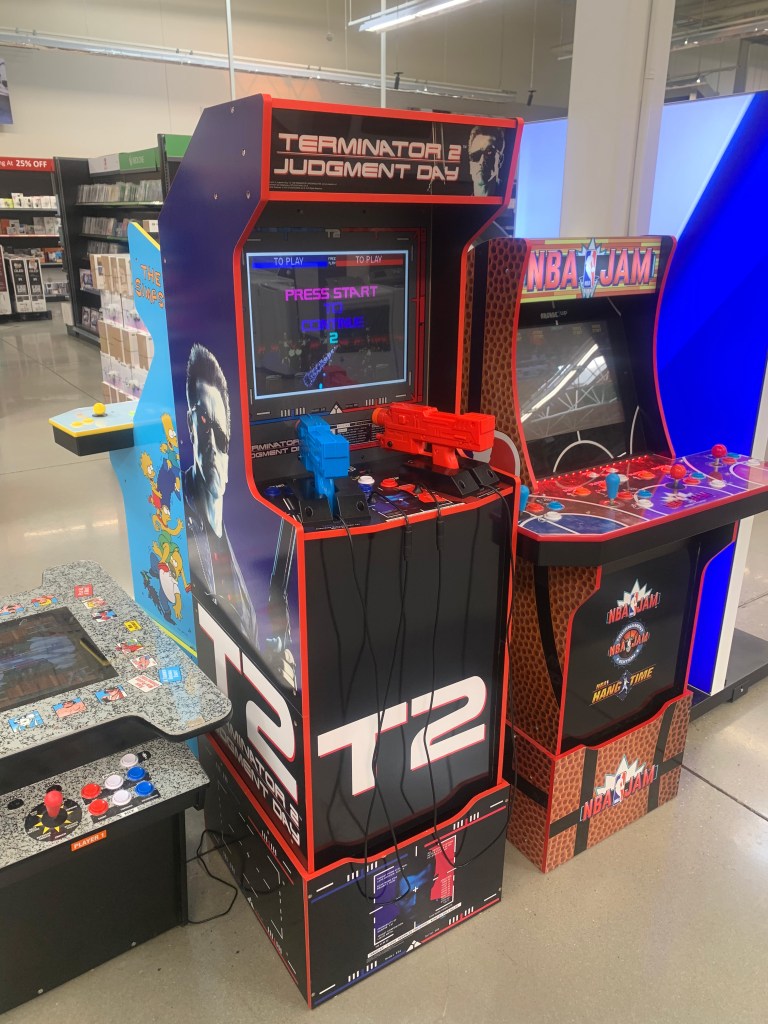
That wait lasted years. I repeatedly checked the Arcade1Up website and third-party sellers like Amazon, Walmart, and Best Buy. It remained out of reach, even as the price finally dropped to $599.
I could have moved on, but I had other ideas. As a regular blood donor, I began applying the $20 gift card from OneBlood toward my Amazon gift card balance.
Halfway there, with a balance of $300, I discovered that the T2 arcade cabinet was no longer in stock. I had waited too long. I searched other websites in vain. eBaby sellers were charging up to $2,000.
The Arcade1Up website had only a few random cabinets showing. Upcoming releases were the same re-packaged Pac-Man and Ms. Pac-Man anniversary editions with nothing new in sight. It seemed the company had run its course.
This realization became clearer on a trip to the local video game store. Used cabinets, worn and faded, were lined up in the corner. They’d become artifacts like the old games and novelties surrounding them.
The impracticality of home arcade ownership had come full circle.
Arcade1Up has seemingly suffered the same fate as video game bars struggling to stay afloat. Plenty of other home arcade companies exist today, but none have started out so promising only to scale back so significantly.
A company called Big Fun has since purchased Arcade1Up assets, with a limited production line that could (potentially) be promising.
The arcade experience of yesterday can’t be replicated entirely, nor should it.
In more encouraging news, the T2 arcade is available again on Amazon.
I’ll just bide my time with a few more blood donations to go.



Leave a Reply